
Don’t Book the Brand. Research the Safari You’re Actually Taking.
AI tools and independent reviews are both useful for planning a safari. Neither is enough on its own. What matters is knowing which questions to ask.
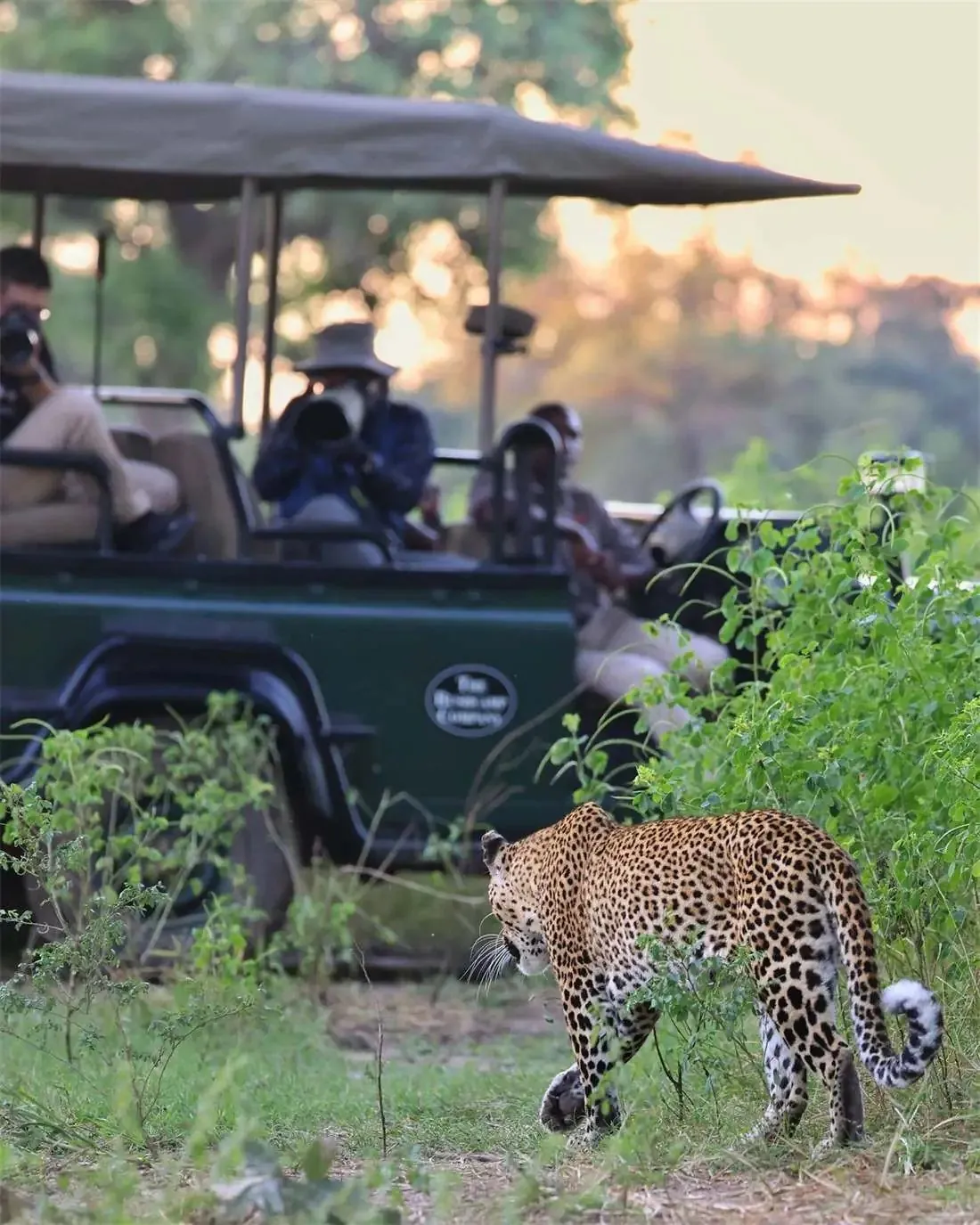
A leopard walks past a single vehicle. How many other vehicles share a sighting rarely shows up in marketing photographs. Photo: The Bushcamp Company.
There has never been more information available about African safari camps. AI tools can summarize thousands of sources in seconds. Tripadvisor holds hundreds of thousands of independent guest reviews. Operator websites are beautifully produced. Travel magazines publish rankings every year.
And yet the planning mistakes travelers make most often have nothing to do with a shortage of information. They come from asking the wrong questions, or from finding the right information in the wrong place.
AI tools and generic rankings favor what is abundant and easy to find online: flagship properties, awards, professional photography and operator marketing. The details that most shape a safari (which concession a camp sits in, whether a circuit holds its quality from camp to camp, whether a property is inside a national park) are much harder for a quick search to surface.
Independent guest reviews, read carefully and for the right things, can help fill those gaps. But they have their own limits. Neither source replaces knowing which questions matter. That is the harder skill, and the one worth developing before you book.
Here are five things a quick AI search may not tell you about an African safari, and how independent reviews can help you find them.
Five Things a Quick AI Search May Not Tell You
These blind spots apply across African destinations. Understanding them helps you know where to look for better information.
1. Concession and territory
AI responses tend to surface flagship properties. They rarely tell you who holds exclusive rights to which territory, or how much of a reserve a camp can actually use. In the Sabi Sands, traversing rights decide whether a camp has a private slice of prime leopard country or shares game loops with many vehicles. In Zambia, a camp in a large exclusive-use concession and one sharing open areas with several operators can feel worlds apart, and rankings almost never show it.
2. The flagship halo
One of the most consequential planning assumptions is that an operator's most famous property represents the standard of its whole circuit. It may not. A flagship lodge naturally dominates an operator's marketing: it gets the most photography, press coverage, awards and online visibility, and AI tools that encounter that material weigh it heavily. What they rarely surface is how the other camps on the same circuit compare.
You see it across the continent. In Botswana, Wilderness's Mombo, on Chief's Island in the Okavango Delta, is one of Africa's most celebrated camps and features heavily in the brand's imagery. The company runs many other camps across Botswana, each with its own water, wildlife and seasons. They share a name, but they are not the same place, and they are not all Mombo.
In South Luangwa, Time + Tide is a good illustration. Its flagship, Chinzombo, is a design-led lodge with private plunge pools, and it carries most of the brand's awards and photography. Its four seasonal camps, Mchenja, Kakuli, Luwi and Nsolo, are a different style: small reed, timber and thatch camps open for the dry season, which Time + Tide itself describes as “a different kind of luxury, one measured not by thread count.” Many guests love them for exactly that.
The point is not that one style is better. It is that a circuit sold on its flagship usually spends most of its nights somewhere else. Look at each camp you will actually sleep in, and compare it with others in the area at a similar price. The question is not how good an operator's best lodge is, but how consistent your circuit will be.
3. Park boundary and access
Across Africa, well-known camps sometimes sit outside national park boundaries, in private reserves or game management areas, and guests drive into the park for activities and back out again. In Kenya, Tanzania, Zambia and Zimbabwe, that changes the rhythm of the safari day. Marketing rarely leads with it, and a quick AI search may not tell the two apart.
4. Fencing
Some safari properties operate inside fully or partly fenced reserves. Others sit within genuinely unfenced national parks where wildlife moves entirely freely. The experiences differ in character: a fenced reserve can produce reliable, concentrated sightings, while an unfenced park produces encounters with animals that have never been contained or managed. This distinction almost never appears in marketing. Experienced safari travelers mention it specifically in their reviews.
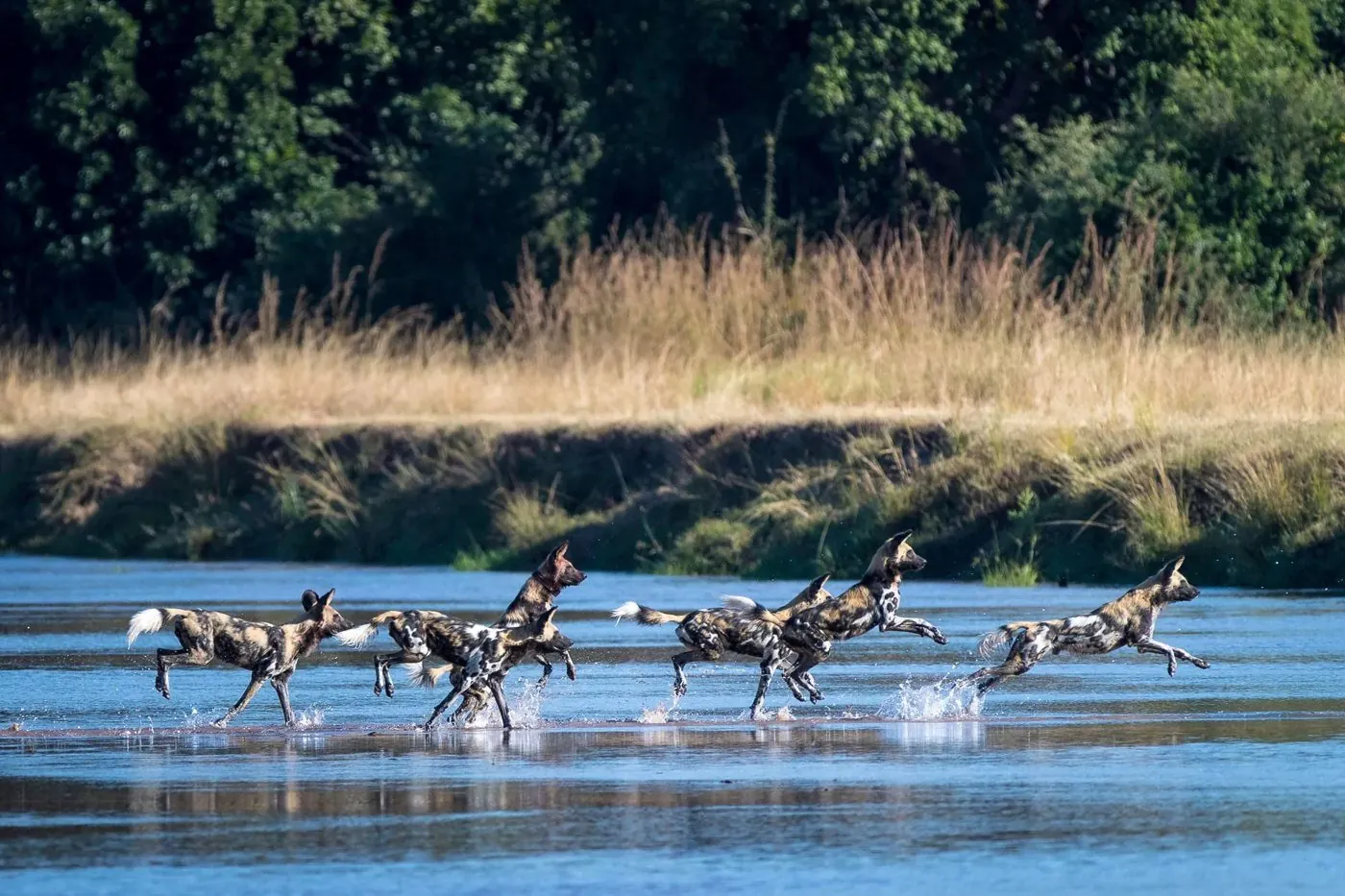
Painted dogs crossing the Luangwa in an unfenced national park, where wildlife moves freely. Photo: Safari Heritage Collection.
5. Photography, and what traveler photos reveal
Professional photography on operator websites is made in the best possible conditions: exceptional light, exceptional seasons, exceptional photographers. Traveler photographs on Tripadvisor are taken on ordinary game drives with ordinary equipment, and they show what a typical guest actually sees. The gap between the two is often revealing.
When you look at a multi-camp operator, notice which property dominates the marketing imagery. If one lodge appears in most of the photographs, don't assume those images represent the other camps carrying the same brand. Open each property's Tripadvisor page separately and compare the traveler photographs. Any differences will be obvious at once.
The real skill in planning a safari is not finding more information. It is knowing which questions will actually predict the experience once you arrive.
Botswana, Okavango Delta: Which Concession?
Botswana's Okavango Delta is one of the most photographed safari destinations on earth, and one of the hardest to judge from marketing alone. A quick search returns Mombo, Jao and Vumbura: flagship properties in flagship concessions, all genuinely excellent. What it rarely explains is that the Delta is not one uniform wildlife area. The concession a camp sits in shapes the experience as much as the camp itself.
The Delta is a mosaic of permanent channels, seasonal floodplains and dry land, and its character changes with the season and the exact location. A camp in the permanently flooded north offers something very different from one on the southern fringes, where water rises and falls and dry-season game drives replace mokoro trips. Marketing photographs make them all look equally watery. Reviews from guests who visited in different months do not.
Botswana's concession system is central to judging quality. The best areas, such as Chief's Island and the northern Delta concessions, hold the richest and most consistent wildlife. A camp there with controlled vehicle numbers has a structural advantage over one in a marginal concession, however beautiful its rooms or long its list of awards. None of this shows up in a quick AI search. Much of it shows up in reviews from guests who felt the difference.
The useful question in Botswana is not which camp has the best rating. It is: which concession is it in, how many other operators share it, and will the area hold water and wildlife in the month you are traveling?
Sabi Sands, South Africa: What Is the Traversing Area?
The Sabi Sands is one of the most marketed safari destinations in Africa. A quick search surfaces MalaMala, Londolozi and similar flagship names. All are genuinely excellent, with large marketing budgets and strong award histories. None of that means they are the only options, or always the best choice for a given traveler.
Reviews consistently show smaller Sabi Sands operations, such as Nottens, Idube and Arathusa, earning equally enthusiastic praise: exceptional guiding, extraordinary sightings, intimate atmospheres and often better value. The gap is not quality; it is visibility. A camp that spends its budget on guiding and wildlife rather than photography and awards will be invisible to a quick AI search, and will appear, in grateful detail, in reviews from guests who found it by word of mouth.
The second thing reviews reveal is the traversing area. Not every Sabi Sands camp can drive the same territory. A camp with a small area in a busy part of the reserve shares sightings with many vehicles; one with a larger, more private area feels entirely different. Photographs won't show you this. Reviews will, in guests' frustration at crowded sightings or their pleasure at having an area largely to themselves.
The useful question in the Sabi Sands is not which camp has the most impressive room. It is: what is the traversing area, and how many other operators share it?
East Africa: National Reserve or Private Conservancy?
The Serengeti and Masai Mara are the most heavily marketed safari ecosystem on earth, and the Great Migration is genuinely one of the world's great wildlife events. It is also unpredictable: the wildebeest cross the Mara River when conditions dictate, not on a travel schedule. Marketing often implies otherwise. Reviews from guests who spent five peak-season days at an empty riverbank tell the other half of the story.
The second thing reviews reveal is vehicle density. The Masai Mara National Reserve in peak season is the most crowded major safari destination in Africa, and a big sighting can draw forty or more vehicles within minutes. Marketing photographs, taken early in the morning or in private conservancies where vehicles are limited, never show this.
The private conservancies bordering the Mara, such as Olare Motorogi, Naboisho, Mara North and Ol Kinyei, work under a fundamentally different model. Off-road driving is allowed. Night drives are allowed. Vehicle numbers are controlled. A camp inside the national reserve and a camp in a private conservancy can look identical in photographs and deliver entirely different wildlife experiences. Reviews from travelers who have done both make the distinction clearly.
The useful question in East Africa is not which camp has the best view of the plains. It is: is the camp inside the national reserve or in a private conservancy, and what are the rules for vehicles at sightings?
South Luangwa, Zambia: Research the Whole Circuit, Not Just the Flagship
South Luangwa is where the gap between a quick search and reality is often widest. The valley has more than thirty camps run by about a dozen operators, and the differences between them, in location, guiding, circuit consistency and access to wilderness, are significant. A quick search surfaces the most marketed. The details that matter most need more specific research.
Inside the park or outside it? Several well-known camps associated with South Luangwa sit outside the park, in an adjoining game management area, and guests cross into the park for every game drive. Marketing rarely makes this prominent. Travelers who have done both describe the difference clearly: waking up inside the park, rather than commuting to it, changes the rhythm of the whole safari.
Circuit consistency. South Luangwa needs researching camp by camp, because many itineraries combine several camps under one brand, and shared branding does not mean shared standards. A polished flagship may sit beside deliberately simpler seasonal bushcamps, which may be exactly what you want, but you should know before booking, not on arrival. Read recent reviews from guests who stayed at several camps on the same circuit and compare their photographs. The question is whether the whole itinerary delivers what you think you are buying.
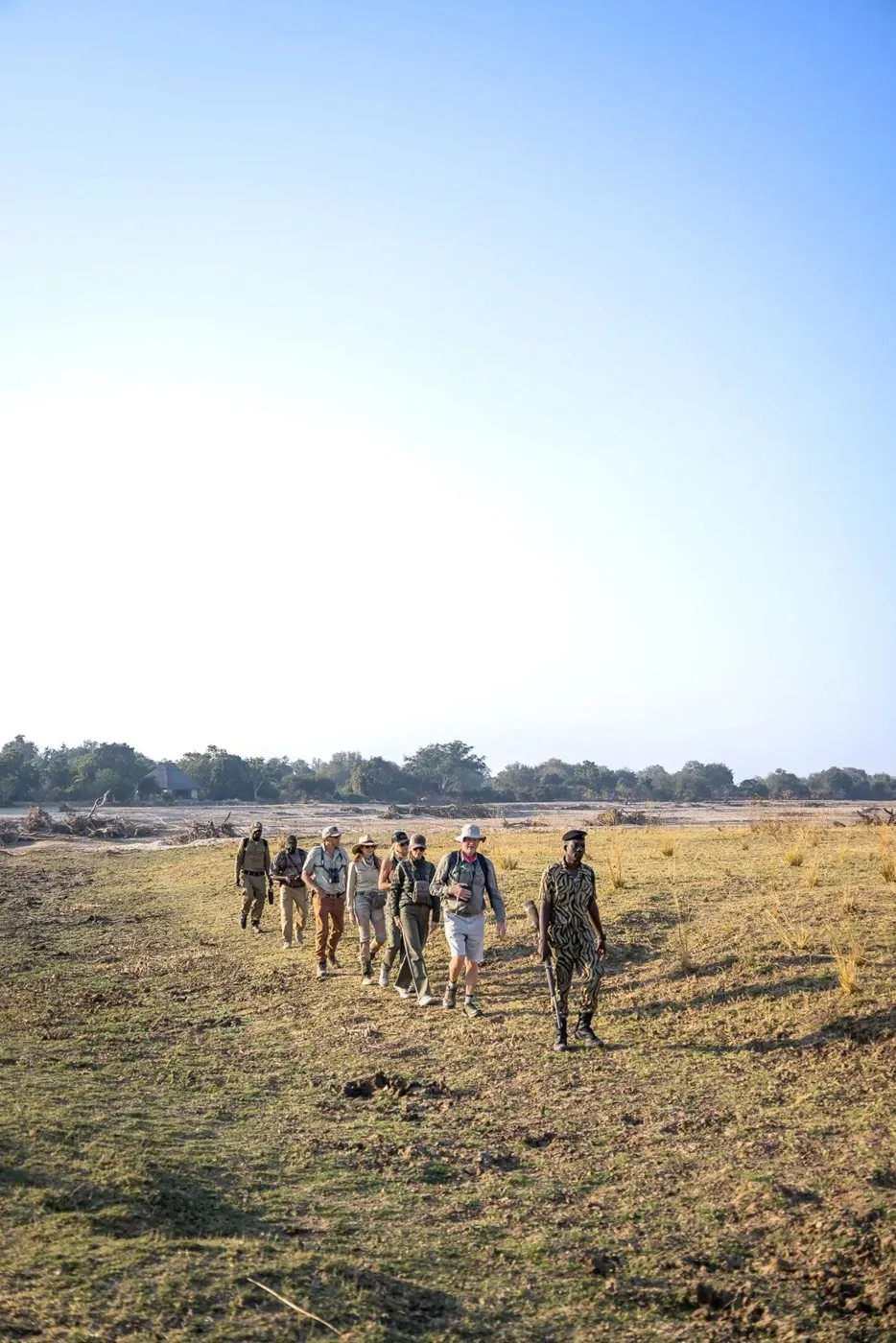
A walking safari in South Luangwa, with a guide and an armed scout. Photo: Safari Heritage Collection.
The guides. South Luangwa has Africa's deepest walking-safari tradition, and in five-star reviews from the valley the guide's name comes up more than anything else. Guides are named and credited in detail, which says a lot about an operator's commitment to that tradition. A review describing a guide who tracked a leopard for forty minutes through riverine forest and had the group in position before it emerged tells you more than any star rating.
Exclusive territory. The guests who most consistently describe having areas entirely to themselves (no other vehicles at sightings, undisturbed animals, drives with no procession building behind them) are those staying with operators that hold genuine exclusive-use concessions inside the national park. This is invisible in most marketing. It is visible in reviews, in the specific words guests use to explain what made the experience feel different from safaris elsewhere.
South Luangwa rewards careful research. The most important questions are not about the flagship. They are about the whole circuit you are booking: is it inside the park, how consistent is it from camp to camp, who are the guides, and does the operator have exclusive access to the country you will travel through?
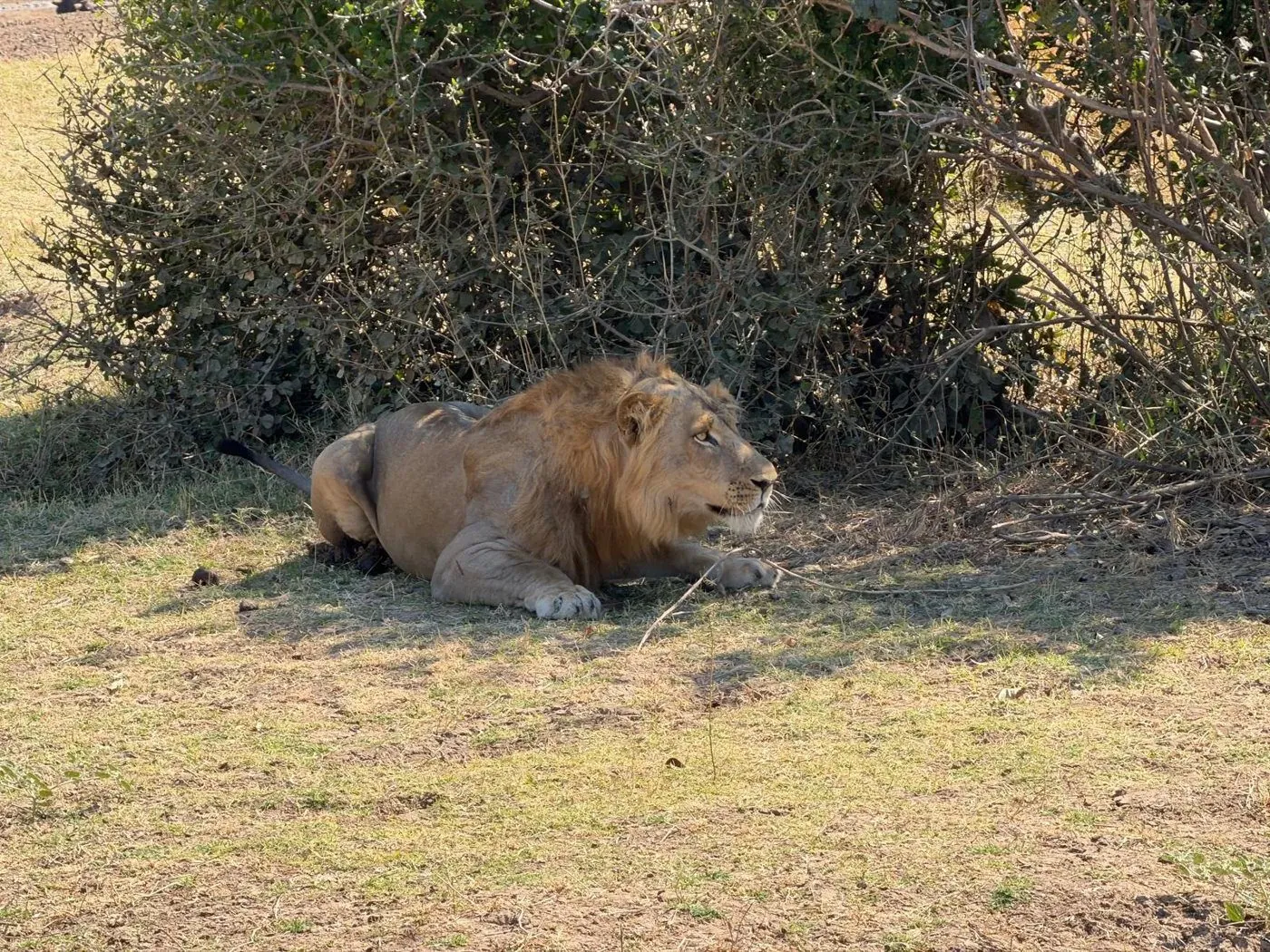
Guests crouch with their guide to watch a lion. In this valley, reviews name the guide more than anything else. Photo: Safari Heritage Collection.
What Neither AI Nor Tripadvisor Will Tell You
Tripadvisor has real limits, and it should no more be treated as the final answer than AI should.
Review volume is not a measure of quality. A camp that has marketed heavily to North American agents for thirty years will have far more reviews than an exceptional smaller operation that relies on word of mouth and repeat guests. The number of reviews tells you about marketing reach, not safari quality.
Ratings can't capture what wasn't experienced. A guest who stayed at one camp and loved it has no basis for comparing it with the camp they didn't stay at. A five-star review of a camp outside the national park, from a guest who didn't know it was outside, is genuinely positive. It doesn't tell you what that guest's safari would have been like had they woken up inside the park instead.
Recency matters. A camp that was exceptional five years ago may carry a high average rating built on reviews that no longer reflect its current management, guides or ownership. Always look at when the reviews were written, not just the overall score.
How to Read a Review That Actually Tells You Something
The most useful reviews name the guide, describe specific encounters rather than calling everything “amazing,” compare honestly with other safaris and say what the camp does best. “Best safari of my life” tells you the guest was happy. “Charles tracked the leopard for forty minutes through riverine forest, and we were in position before it appeared” tells you something real about the guiding.
Read for specifics. And when you are evaluating a multi-camp circuit, look for reviews from guests who moved through several camps with the same operator. Their comparisons, not the star ratings, are the most reliable guide to what the circuit actually delivers.
The African Paths View
We use AI tools, Tripadvisor and independent assessments, all as inputs. No single source gives the complete picture. What we offer as specialists is not more information. It is judgment about which information matters.
The hardest part of planning a great safari is no longer finding information. There is more of it than ever. The hard part is knowing which information will actually predict the experience once you are sitting beside a guide at five-thirty in the morning and the vehicle pulls away from camp.
That is the difference between researching a safari and understanding one. The name of the lodge is not enough. You need to understand the structure of the safari around it: the concession, the access, the consistency of the circuit and the guide. Those are the things that decide what the next week becomes.
