
How to Plan a Luxury Safari: What the Process Actually Involves
The decisions that matter most are rarely the obvious ones, and the details that make a trip extraordinary are often invisible until you know what to look for.
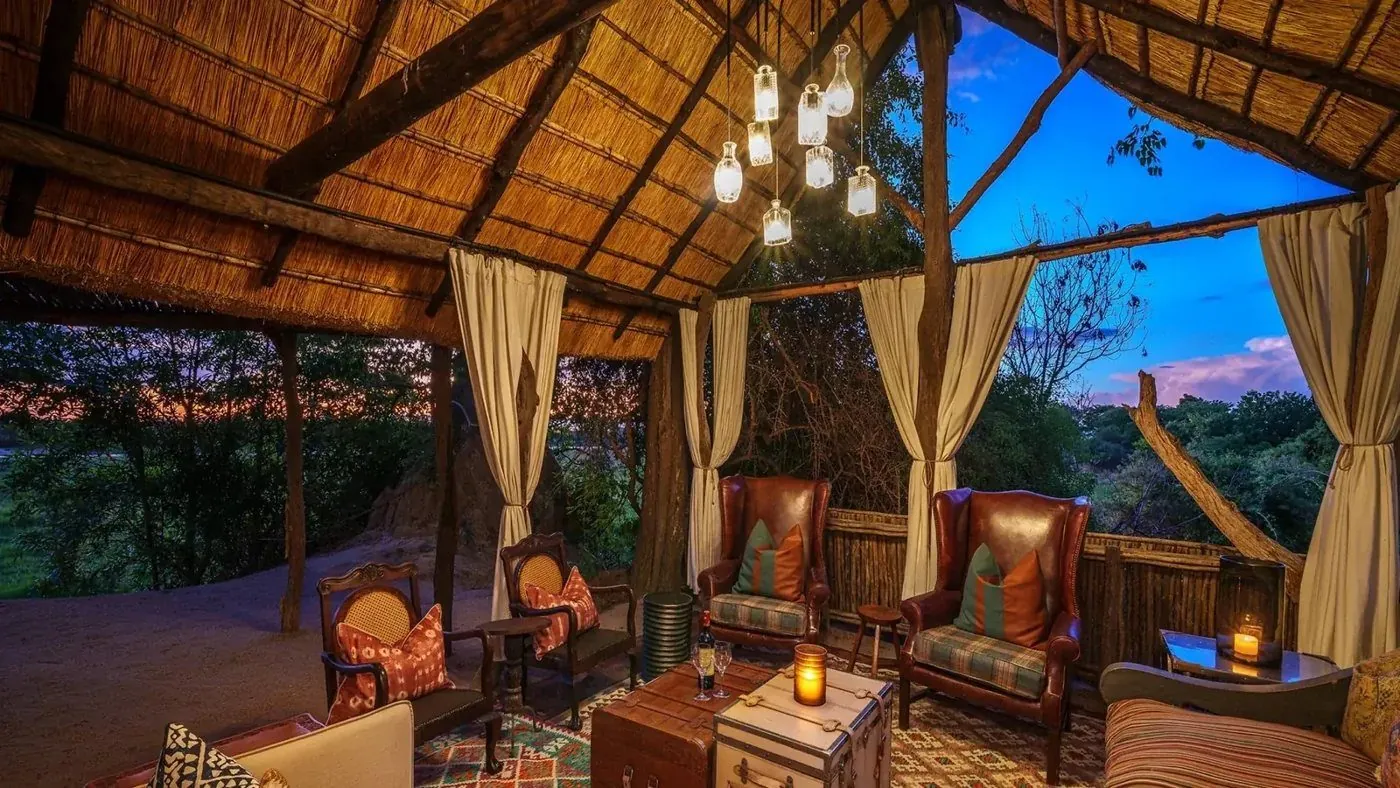
The lounge at Zungulila, a small bushcamp in South Luangwa. Photo: The Bushcamp Company.
The safari industry is full of beautiful images, compelling language and similar-sounding options. Every camp claims exceptional wildlife. Every operator promises expert guiding. Every itinerary is described as carefully curated.
None of that is necessarily untrue. But it means the work of planning a genuinely exceptional safari, rather than simply a good one, lies beneath the surface of what most marketing presents. This guide covers what that work actually involves.
Start With What You Actually Want
The most common planning mistake is starting with destinations rather than motivations. The right question is not “Should I go to Zambia or Kenya?” It is “What kind of experience am I looking for, and where is it done best?” Those are different questions with different answers.
A traveler whose priority is seeing the greatest variety of wildlife in the most comfortable setting is planning a different trip from one who wants to walk through remote wilderness with a guide who has spent decades learning it. Both can be called luxury safaris. They are not the same experience, and they do not happen in the same places.
Before researching destinations or camps, be honest with yourself about a few things:
How important is physical comfort compared with remoteness and authenticity?
Do you want to walk, or would you prefer game drives from a vehicle?
Is this a first safari, where breadth and reliability matter most, or a return visit where depth and immersion are the goal?
Are there specific animals or experiences that are non-negotiable?
How much of your budget goes to the safari itself, and how much to the journey to get there?
The clearer your answers, the more precisely a specialist can match you to the right destination, operator and camp, rather than defaulting to whatever is most heavily marketed.
A bespoke safari is not about ticking boxes. It is about identifying what you genuinely want from the experience and building an itinerary that delivers it. That process starts before a single destination is chosen.
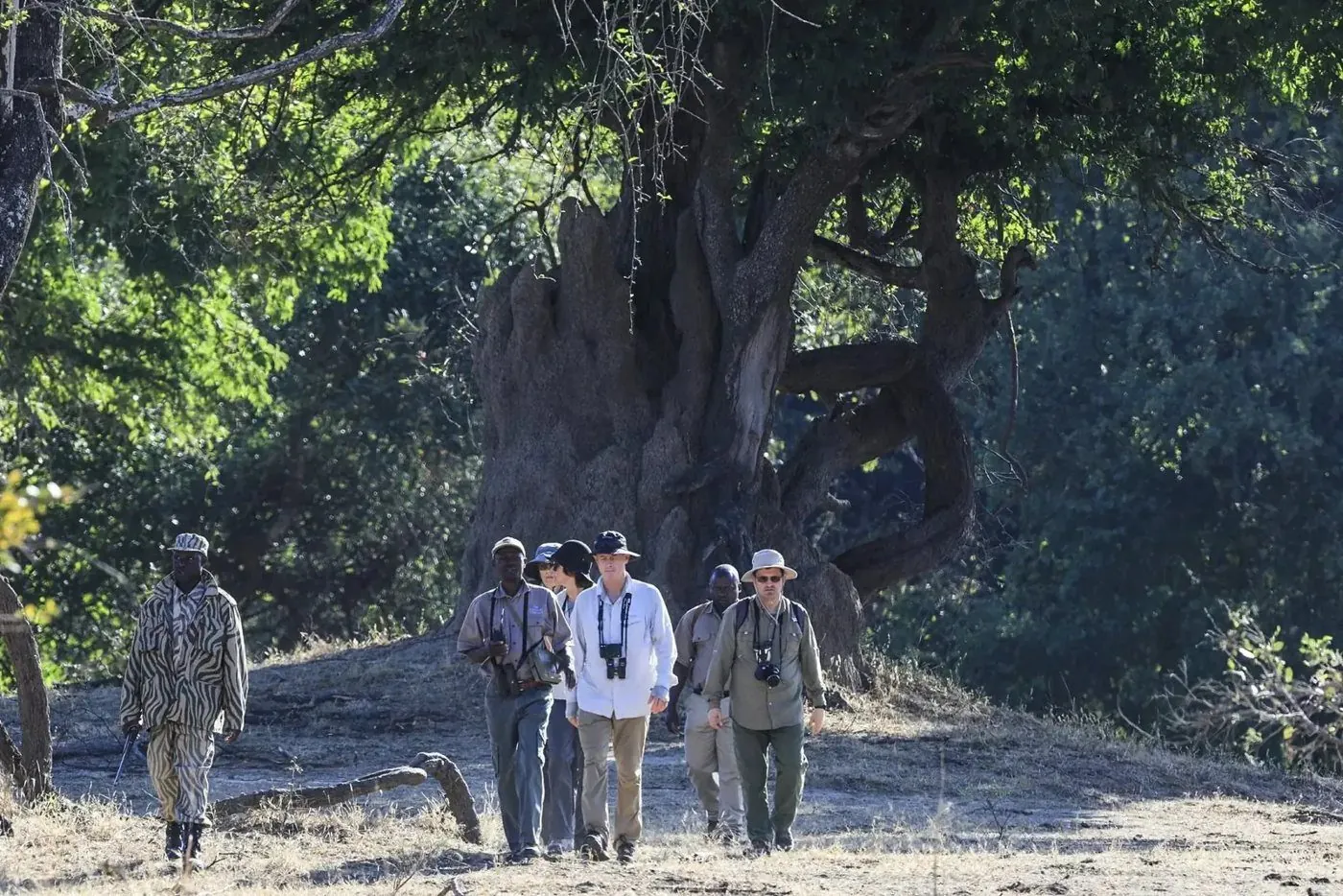
On foot beneath a baobab. Whether you want to walk or drive shapes the whole itinerary. Photo: Safari Heritage Collection.
Understand What You Are Actually Buying
A safari rate is not simply the cost of a room. At most high-end African camps the published rate is fully inclusive: accommodation, all meals, game drives, walking safaris, night drives and often laundry and selected drinks. Park fees and conservation levies are usually charged on top (in South Luangwa, about $95 to $120 per person per night), and our quotes always include them. It covers everything you will do during your stay.
What it does not cover varies by camp and is worth confirming: premium drinks, single supplements, flights between camps, visas, travel insurance and staff gratuities. A clear picture of the total cost before you commit avoids surprises and makes accurate budgeting possible.
The more important question is what the rate is actually buying. Two camps with identical rates in the same park can deliver very different experiences. The things that most affect quality rarely show up in a price:
The guide. The person beside you in the vehicle, or walking ahead of you on the trail, determines more about your safari than any amenity. Their knowledge of this particular ecosystem, their years in this valley or reserve, their instinct for animal behavior: this is what separates an extraordinary safari from a satisfactory one. Ask who will guide you, and ask about their background.
Exclusive territory. Some operators hold exclusive-use concessions over large areas of wilderness, which means no other operator's vehicles share those game loops. A leopard sighting is different when yours is the only vehicle. The silence on a walk is different when no other groups are nearby. Exclusive access is a structural advantage that a higher room rate elsewhere cannot easily buy.
Camp size. A camp with six guests delivers a different experience from one with thirty-six. Smaller camps mean more personal service, more flexible schedules and a stronger sense of being somewhere genuinely remote. In South Luangwa, the best bushcamps take eight guests or fewer. That is a deliberate choice, not a constraint.
Park location. Some camps marketed as being in a national park are actually in an adjoining game management area or a private reserve outside the park boundary. That affects the activities available, the wildlife density and whether each game drive begins and ends inside the wilderness or involves a commute to it. Ask specifically: is this camp inside the national park?
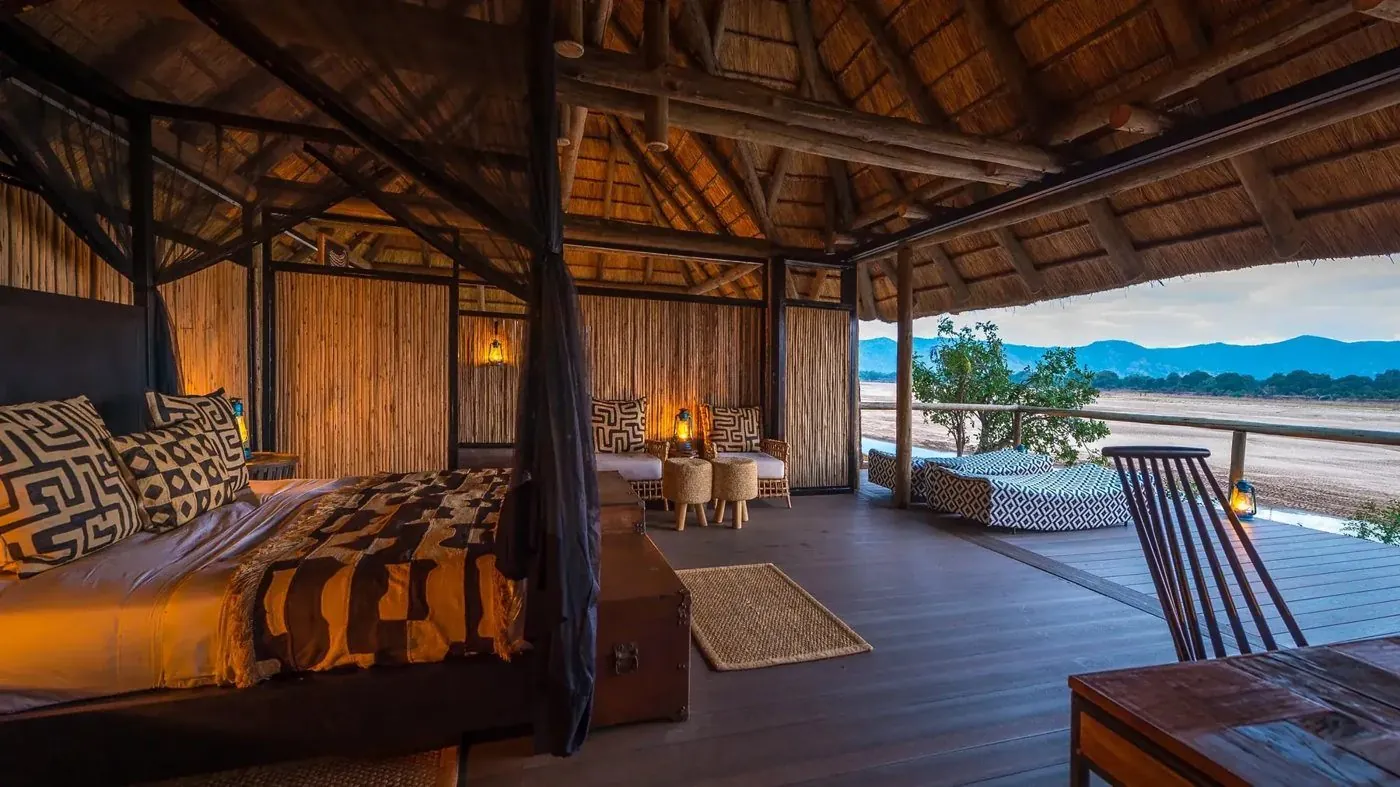
A room at Chamilandu. At this level, the rate covers far more than the room. Photo: The Bushcamp Company.
The Guide Is the Safari
This point deserves its own section because it is the one most consistently underweighted in how safaris are marketed and researched.
Room photographs, award lists and design credentials are easy to evaluate online. The quality of guiding is not. Yet across thousands of independent guest reviews from every major African safari destination, the factor that most consistently decides whether a guest calls the experience extraordinary, rather than simply good, is the guide. Named specifically. Credited personally. Described in detail.
What sets an exceptional guide apart is not just knowledge. It is years in one ecosystem, learning its animals, seasons and hidden details: the leopard that moves through a particular stretch of forest at dusk, the painted dogs that den in the same area each season, the signs that come before a kill. That knowledge is built through presence, and it turns a sighting into an encounter.
When evaluating camps and operators, ask:
How long have their guides worked in this area?
Is there guide continuity across a multi-camp stay? Do guests who move between camps on a circuit keep the same guide?
What training do they invest in beyond the national licensing requirement?
The answers reveal more about an operator than any photograph.
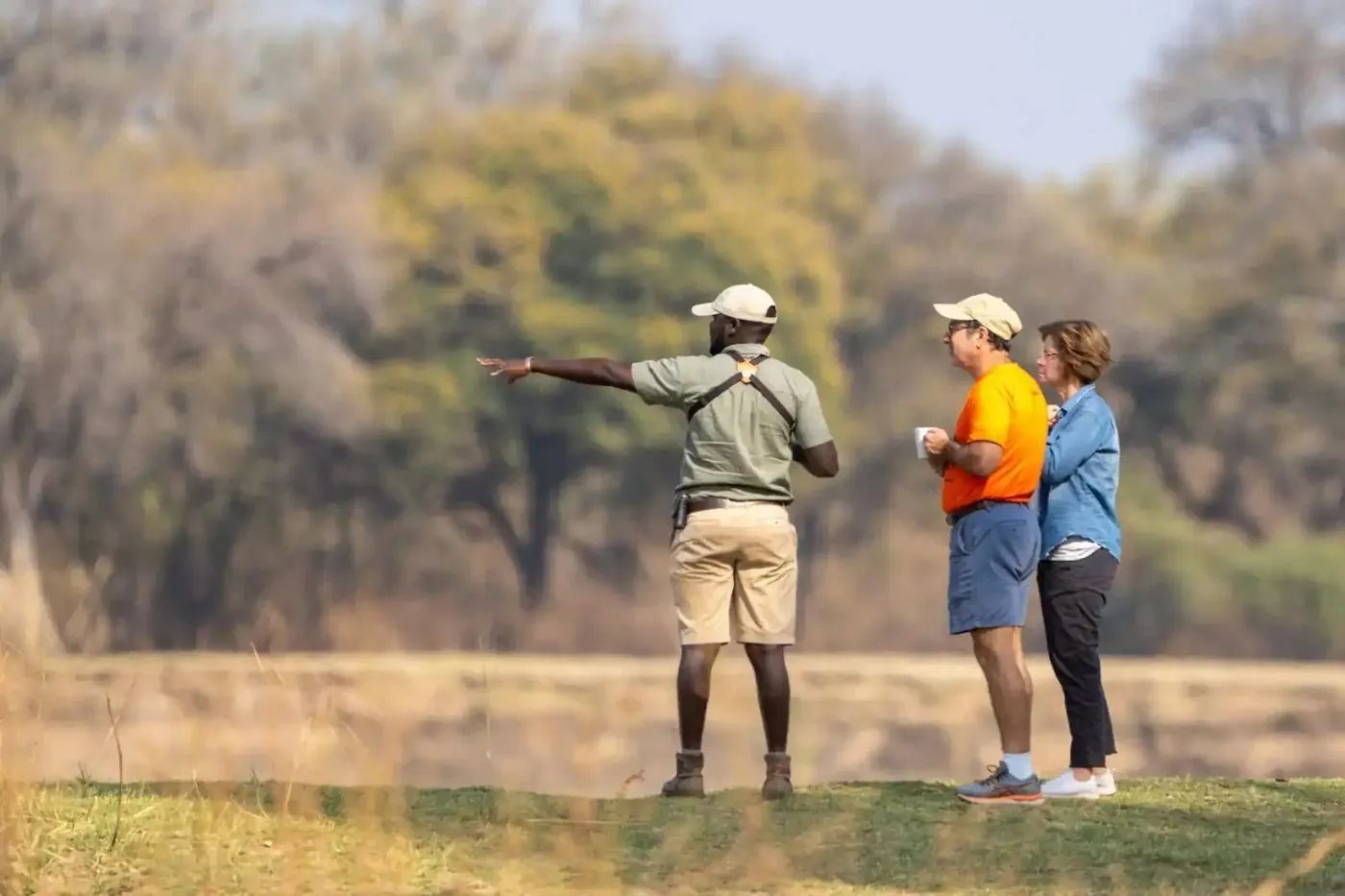
A guide reads the country with his guests in the north of South Luangwa. Photo: Lion Camp.
How to Evaluate an Operator Online
Safari operators range from specialists with decades on the ground to booking platforms selling inventory they have never visited. The difference matters more in this industry than almost anywhere else in travel, because the decisions that most affect your trip (which camp, which guide, which time of year for your interests) take real knowledge to get right.
A few questions are more revealing than most:
Have they been there? Not to the region generally. To the specific camps they are recommending, and recently. Did they stay as paying guests, or on a carefully staged familiarization trip organized by the camp? The honest answer tells you a great deal about the basis of their recommendation.
Can they explain the differences? A specialist should be able to tell you exactly why one camp suits you better than a comparable alternative. Not in marketing language, but in practical terms: the guiding culture, the wildlife in that area at that time of year, the character of the camp and how it matches what you said you wanted. If they cannot, they are working from a brochure.
Do they specialize? A consultant selling Kenya, Tanzania, Botswana, Zambia, Zimbabwe, South Africa, Rwanda, Uganda and Namibia all at once is spreading their knowledge very thin. Real expertise in a destination takes years to build, and it cannot exist across a dozen countries at once. Generalists don't produce bad safaris, but there is a ceiling to the depth they can bring to any one place.
Where are they based? A specialist based in the destination, or with long-standing relationships with people who are, has a different quality of information from one working from a desk on another continent. Things change: camps change hands, guides move, concession conditions shift. Current knowledge requires current presence.
Building the Itinerary: Less Is More
The most common itinerary mistake is trying to see too much in too little time. Four destinations in ten days sounds impressive on paper. In practice it means spending a large share of the trip in transit: boarding light aircraft, checking in, settling into new rhythms and starting over with a new guide each time.
Fewer destinations, with more time in each, changes everything. By the third or fourth day in one place, something shifts. Your guide stops introducing the landscape and you start reading it yourself. The animals become individuals. The light at six in the morning, the afternoon heat, the sounds after dark become familiar. You stop visiting and start inhabiting the place, even briefly.
For a first Zambia safari, plan at least four nights in South Luangwa, ideally five to seven. If time and budget allow a circuit of two or three camps in the same wilderness, the trip becomes a journey rather than a stay: transfers become game drives, and the landscape deepens as you move through it.
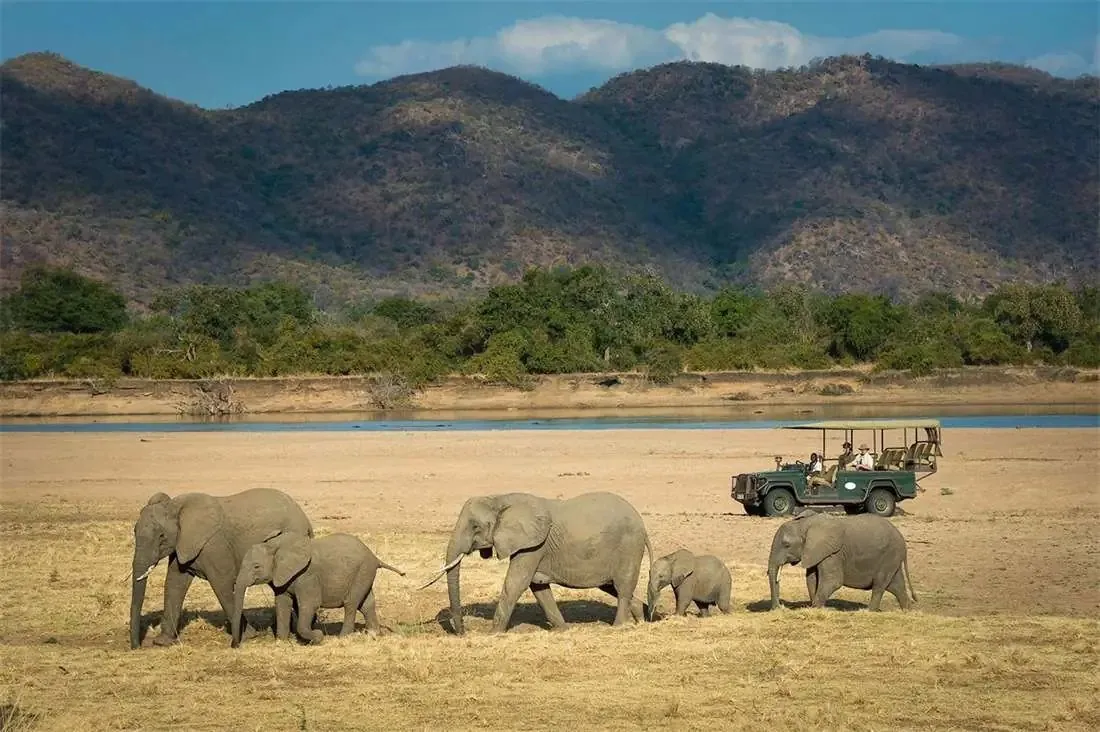
Elephants and a game-drive vehicle beneath the escarpment. With more time in one place, the landscape becomes familiar. Photo: The Bushcamp Company.
Timing, Logistics and the Details That Matter
The dry season, June through October, is the default recommendation for good reasons: wildlife concentrates around shrinking water sources, walking is at its best, and most remote camps are open. But within the dry season the experience varies considerably. June brings cooler temperatures and lush, post-rain vegetation. September and October bring the most dramatic game viewing, and real heat.
For peak season (July and August in South Luangwa, June through August in Botswana) the best rooms at the best camps often fill twelve months ahead. This is not an exaggeration. A small bushcamp has only so many rooms in its peak window. The earlier the planning begins, the more options remain open.
On logistics: light-aircraft flights between camps are usually the smoothest part of a Zambia itinerary, but they need attention to luggage limits (typically 22 to 33 pounds, or 10 to 15 kilograms, in a soft bag), transfer times and connection buffers. A good specialist builds these into the plan without being asked.
On health and safety: confirm vaccination requirements well in advance (a yellow fever certificate is required if you are arriving from some countries, and malaria prevention is recommended for most Zambia itineraries). Make sure your travel insurance covers medical evacuation; remote camps have evacuation procedures, but personal cover is essential. Packing is simpler than most people expect: neutral colors, layers for cold mornings, sun protection and good walking shoes if you plan to walk.
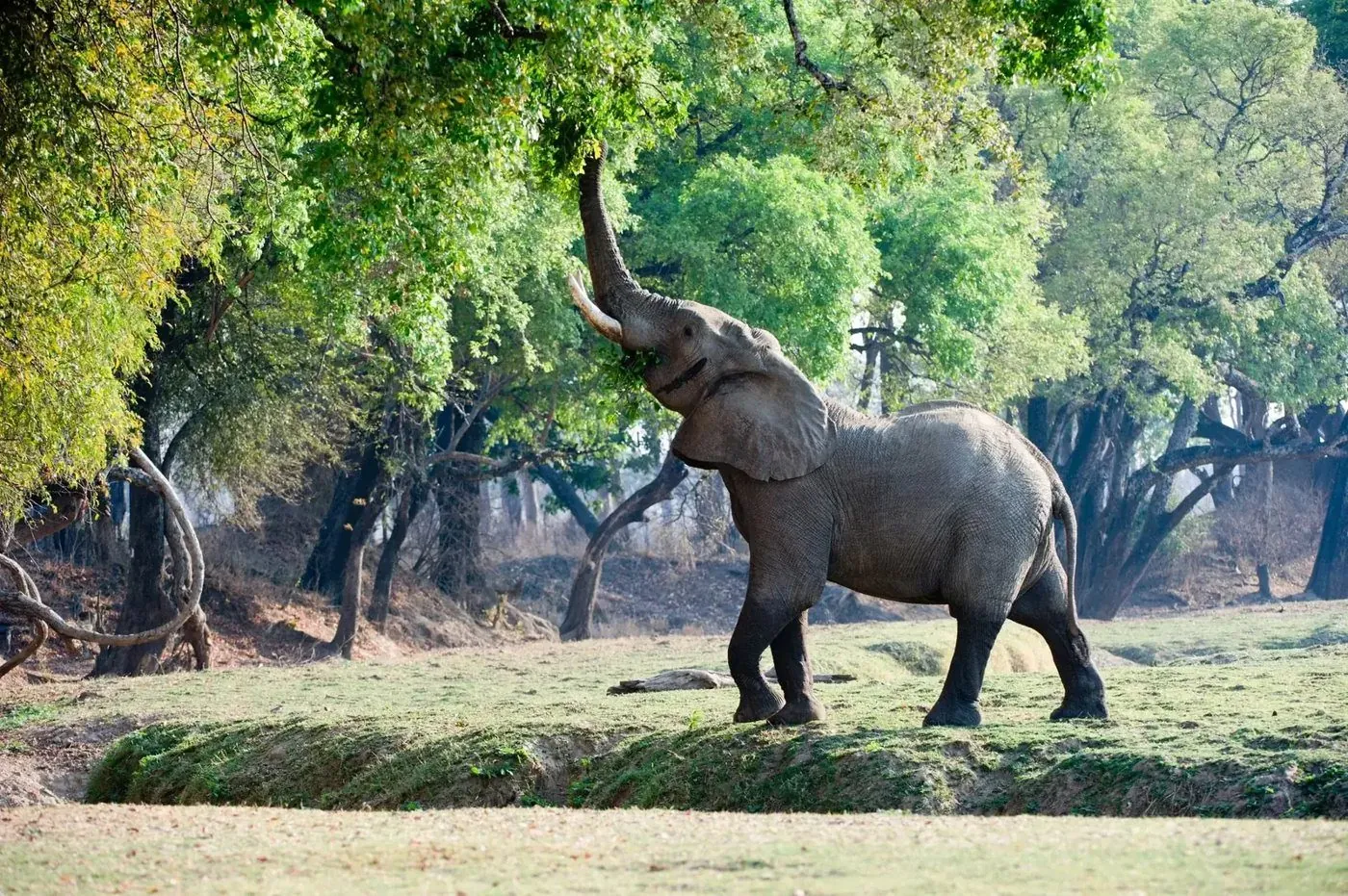
The Luangwa after the rains. Each season offers a different safari. Photo: The Bushcamp Company.
What a Good Safari Specialist Does Differently
The value a specialist adds is not access to camps that would otherwise be unavailable. Most camps take direct bookings. The value is judgment: knowing which camp suits your interests, which time of year matches what you want to do, and which combination of experiences makes a coherent journey rather than a list of highlights.
A good specialist asks better questions before making recommendations. They push back when your first instinct would produce a less satisfying trip. They tell you when a camp is not right for you, even when it would be easy to sell. And they know the details (the guide who retired, the camp that changed management, the concession where wildlife conditions have shifted) that do not appear in any online listing.
That knowledge is built through years in specific destinations, relationships with operators that go beyond selling, and feedback from guests whose experiences add up to a picture of what each camp actually delivers rather than what it claims.
One more thing sets a good specialist apart: they treat your budget as if it were their own. They send you to the camp that best fits what you asked for, not the one that pays the most commission. There are many ways to spend money on safari and only a few ways to spend it wisely. A good specialist knows the difference.
A great safari does not happen by accident. It happens because someone with real knowledge of a specific place made a series of informed decisions about where you should go, when, with whom and for how long. That is what the planning process is actually for.
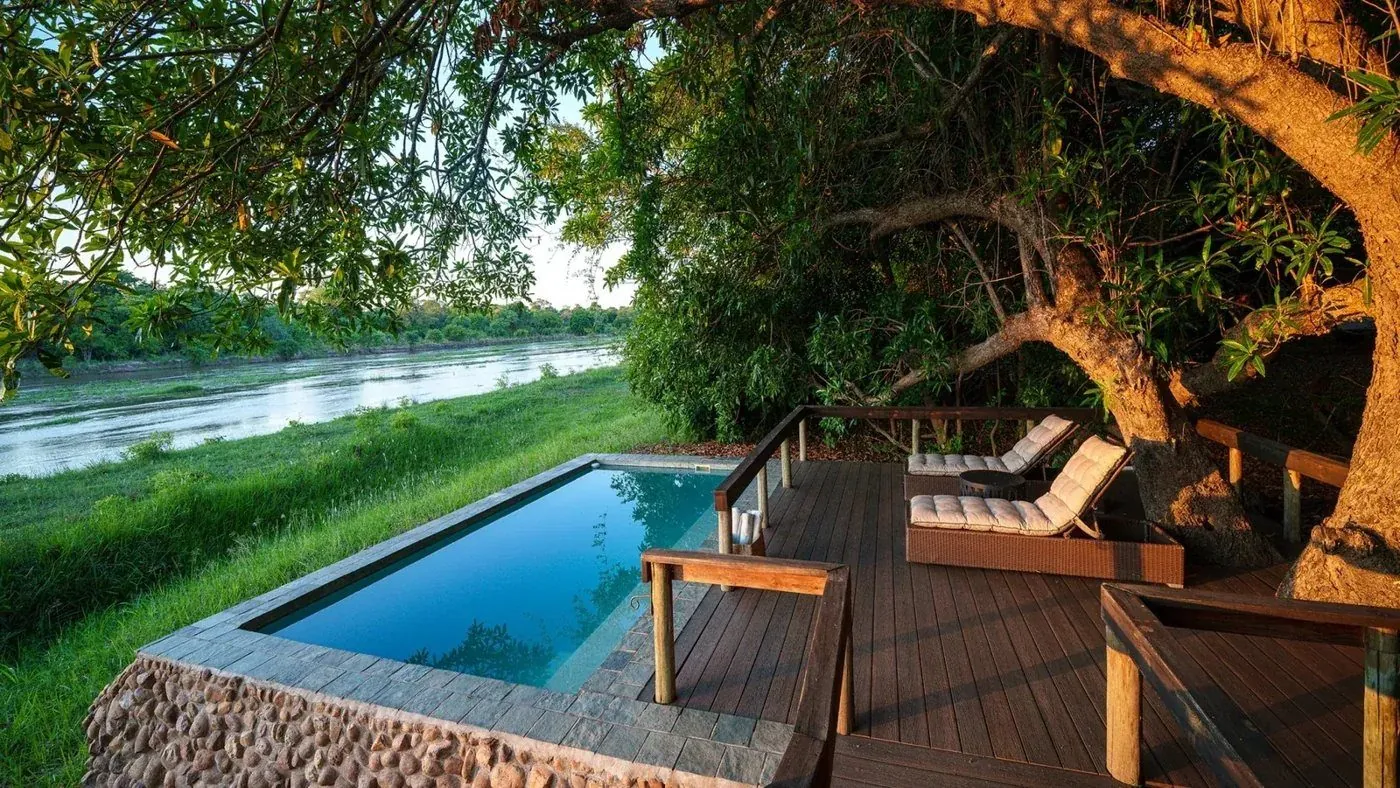
The plunge pool at Kapamba. Photo: The Bushcamp Company.
