
The Okavango Delta, the Sabi Sands or Zambia? Choosing Your Week in the Wild
Water country, big-cat country or walking country. Three different kinds of safari, what each does best, and how to decide.
The Okavango Delta has a reputation as the finest safari in Africa, and it is easy to see why. A river that rises in Angola spreads out across the Kalahari and turns the desert into a maze of channels, islands and lagoons. But a reputation is not a trip plan. If you are choosing between a week in the Delta, a week in South Africa’s Sabi Sands, or a multi-park journey through Zambia, the useful question is not which one is best. It is which one suits what you want to feel and see.
We will gladly book Botswana. It is simply not the place we most often send people, because Zambia and the Sabi Sands are our own favorites, so you should read this knowing where we lean. We have tried to be fair to the Delta anyway, because a good adviser should say when another place is the right answer.
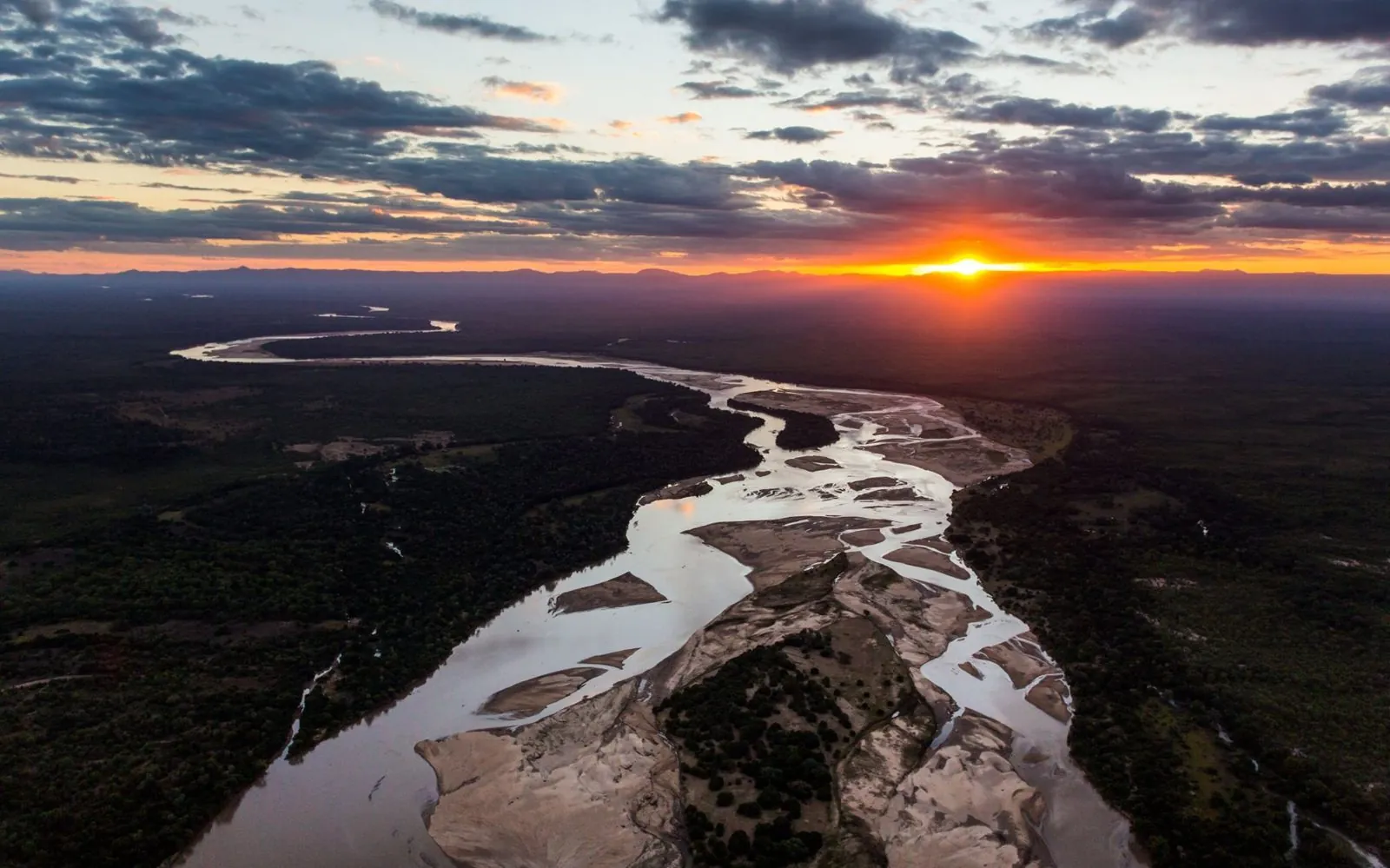
The Delta is a water country
The first thing to understand is how strange the Delta is. Its water comes from summer rains in Angola’s highlands, which feed rivers that travel about 1,200 kilometers south. The flood reaches Botswana between March and May and peaks around July, in the middle of the dry winter, then recedes by November. In the dry months before the flood, perhaps 500 to 700 square kilometers of open water are visible. At the peak that grows past 7,000 square kilometers.
That timing shapes everything:
- May to September, high water. Boat and mokoro (dugout canoe) trips are at their best, and game drives run on the larger islands and higher ground.
- September to November, falling water. Wildlife gathers around shrinking pools and predator-prey encounters intensify. October can be very hot.
- November to March, green season. Fewer visitors, lower rates, migratory birds and newborn antelope.
The flood also varies a great deal from year to year, depending on rainfall in Angola. The early 2010s saw large floods, and 2019 was among the lowest on record. A camp that offers boating one year may be dry the next, so it pays to ask your adviser about recent conditions.
The Delta is unfenced. Part of it, the Moremi Game Reserve, is state-protected and generally limited to daytime vehicle drives, while many of the private concessions around it allow more, such as guided walks and night drives. Camps are often on islands, so most guests arrive by light aircraft.
The Sabi Sands is about intensity
The Sabi Sands is a private reserve of about 65,000 hectares in South Africa, owned by landowners who have, in many cases, held the land for generations. The fence that once separated it from Kruger National Park was removed in 1993, so animals move freely between them. Guides can drive off-road, run night drives and, at some lodges, lead walks.
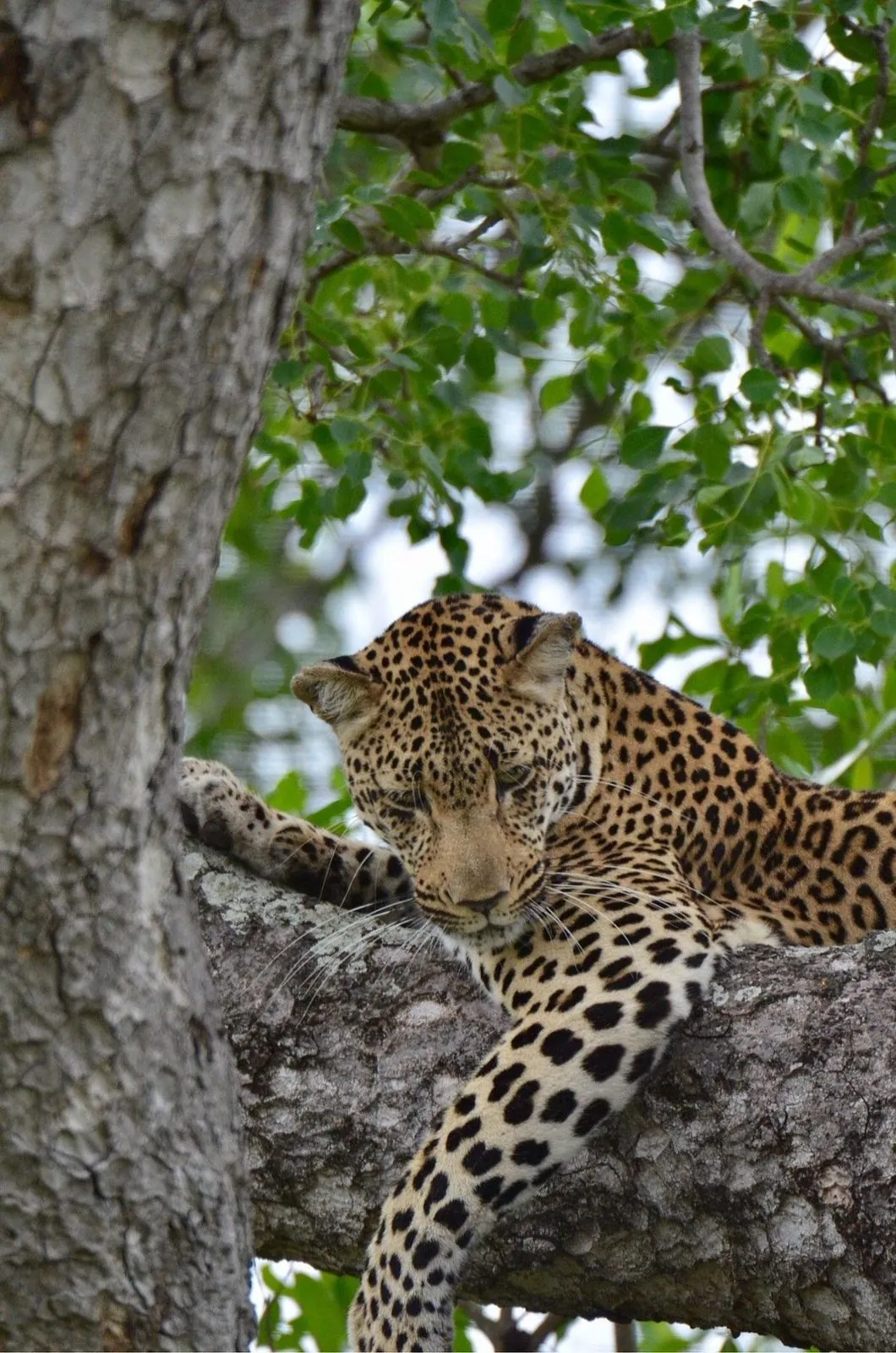
It is best known for leopards. A camera-trap survey by Singita and Panthera estimated about 12.2 leopards per 100 square kilometers, which the researchers described as the highest of any protected area in South Africa surveyed so far. We would be careful with claims of “the best in Africa”, since densities are measured in different ways in different places. What can be said fairly is that leopard sightings in the Sabi Sands are exceptionally frequent, often close and often followed by guides for long periods.
It is also a place where rhinos need heavy protection. One reserve manager reported that after dehorning began in May 2022, poaching in the area fell sharply, and he called the practice an interim tool, not a solution. You should expect to see rhinos, and to see that some are dehorned. That is part of how they are kept alive.
Zambia is about being on the ground
South Luangwa is a national park of about 9,050 square kilometers, and the river is what organizes it. As the dry season progresses, animals concentrate along the river and its lagoons, and the action becomes dense and predictable. The park is where walking safaris began as a tourism product, in the early 1960s, and it still offers walks, night drives and day drives under one roof. Camps are small, and many are quite simple.
A multi-park Zambia trip adds variety: the intimate Luangwa valley, the open plains of Busanga in Kafue National Park, perhaps the Lower Zambezi or Victoria Falls. You trade some density for scale and for a range of landscapes.
Which suits which traveler
Choose the Delta if water is part of your dream: gliding through channels, birds, islands, a sense of total quiet. It tends to suit repeat safari-goers, photographers and people who want a camp with few neighbors.
Choose the Sabi Sands if you want the highest odds of close, extended leopard viewing, comfortable lodges and simple logistics. It pairs well with Cape Town and Victoria Falls, and flights from Johannesburg are straightforward.
Choose Zambia if you want to get out of the vehicle, to walk, to track, to stay in small camps and to enjoy a wild landscape that feels unmanaged. It is our home ground, and for many travelers it gives the most memorable days per dollar.
A word on cost
Prices change every season, so we will not quote numbers. In general, Delta concession camps are among the most expensive in Africa. Part of the reason is practical: camps are remote, supplies and guests arrive by air, and bed numbers are limited, so fewer guests share the cost. Light-aircraft hops between camps add to the total. Zambian bushcamps are usually priced lower than flagship Delta camps, and Sabi Sands lodges vary widely. If budget matters, compare the full cost including flights, park fees and activities, not just the nightly rate.
The honest answer
These three are not rivals so much as three different kinds of week. A Delta journey is about water, quiet and space. A Sabi Sands stay is about big cats and ease. A Zambian circuit is about walking, bushcraft and variety. Some people do all three over a few trips, and the order matters less than the match.
If you are unsure, tell us what you picture when you imagine the trip, and we will say honestly which place fits. If the answer is the Delta, we will say so, and we will book it for you gladly.
Sources and notes
Figures were checked against public sources in November 2026 and can change. Delta flood timing and extent: okavango.com. Sabi Sand history and the 1993 removal of the fence with Kruger: Kruger Park guide. Sabi Sands size and activities: Discover Africa. Leopard density study: Singita. Rhino poaching and dehorning figures: Daily Maverick. South Luangwa’s area: Wikipedia.
