
Follow the Water: Why the Best Safaris Are Built Around Rivers and Lagoons
Water decides where the animals are, what the light looks like and what you see on foot. How the dry season pull works, and how to choose a camp with good water.
Ask any good guide what decides a safari, and sooner or later the answer is water. Not the lodge, not the vehicle, not even the season on its own, but where the water is and what it does to the land around it. Animals go where the water is. Birds, trees, shade and light follow. And for the traveler, the places with the most natural water tend to be the places that look the way Africa looks in your head.
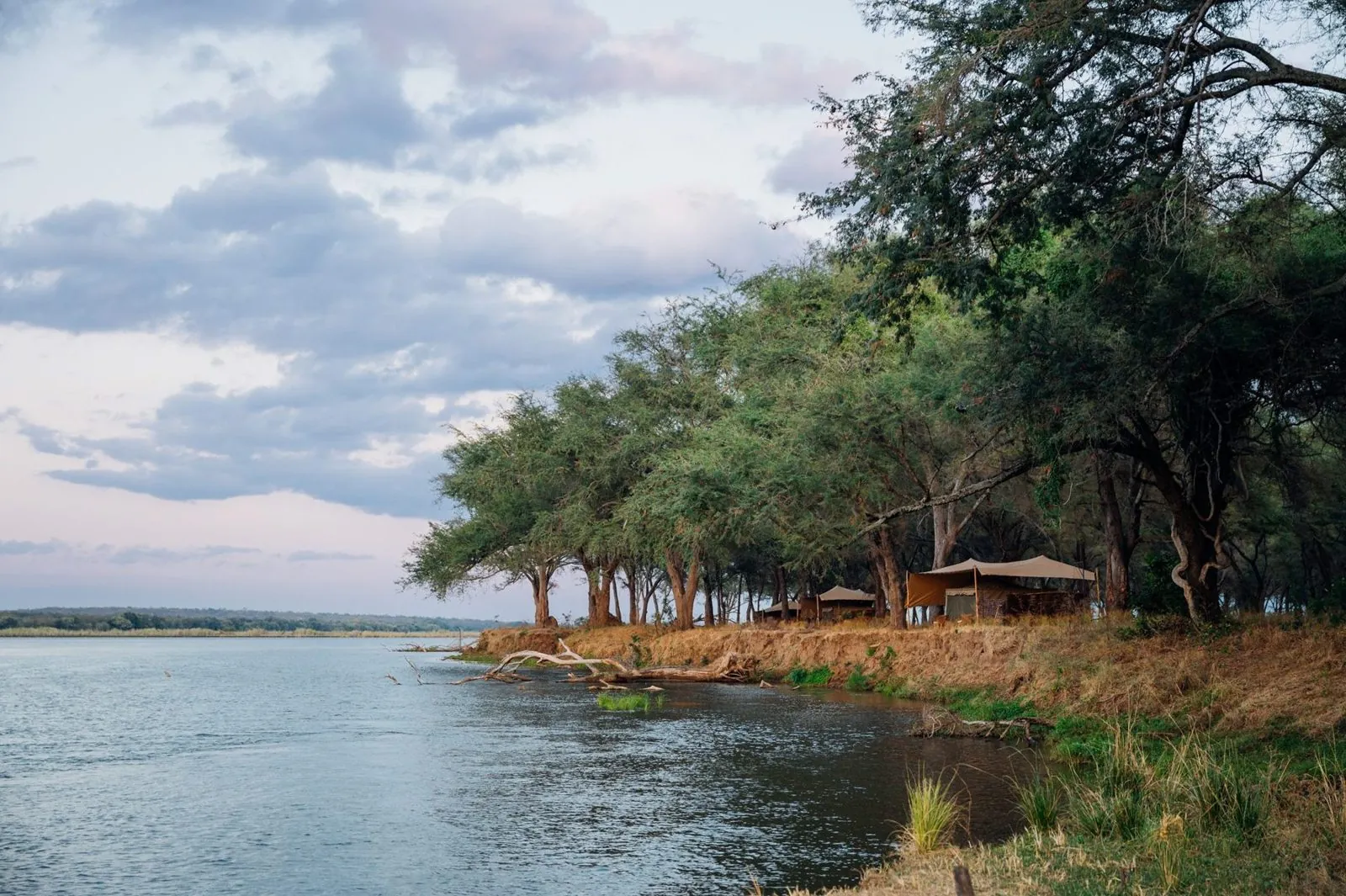
That is why we pay so much attention to water when we plan a safari. It is also something most brochures never mention, so here is how it works, and how to use it when you are choosing where to go.
Why water decides everything
In the wet season, rain fills pans, streams and hollows across the bush, and wildlife spreads out over a huge area. Animals can drink almost anywhere, so they can live almost anywhere. Then the rains stop. Over the next five or six months the small water sources disappear one by one, and the animals that depend on drinking every day have to commit to what is left.
By the late dry season that means a short list: a big river, a few deep lagoons, and, in some parks, pumped waterholes. Everything with a daily need for water arrives at those places in a steady stream. Predators arrive because their prey does. The bush near the water is also where the best shade, the greenest browse and the most birdlife are found.
The dry season pull
This is the part that surprises first-time visitors. A safari in the dry season, roughly June to October in Zambia, is not a safari in an empty, dried-out landscape. It is a safari in a landscape that has shrunk to a few magnets.
- Early dry season (May to July). The land is still green. Lagoons are full, and wildlife is spread along the valley. This is a gentle, scenic time to be out.
- Mid dry season (July to September). Seasonal pools and small water sources begin to vanish, grass is eaten and burned back, and visibility improves. Herds start to build along the river.
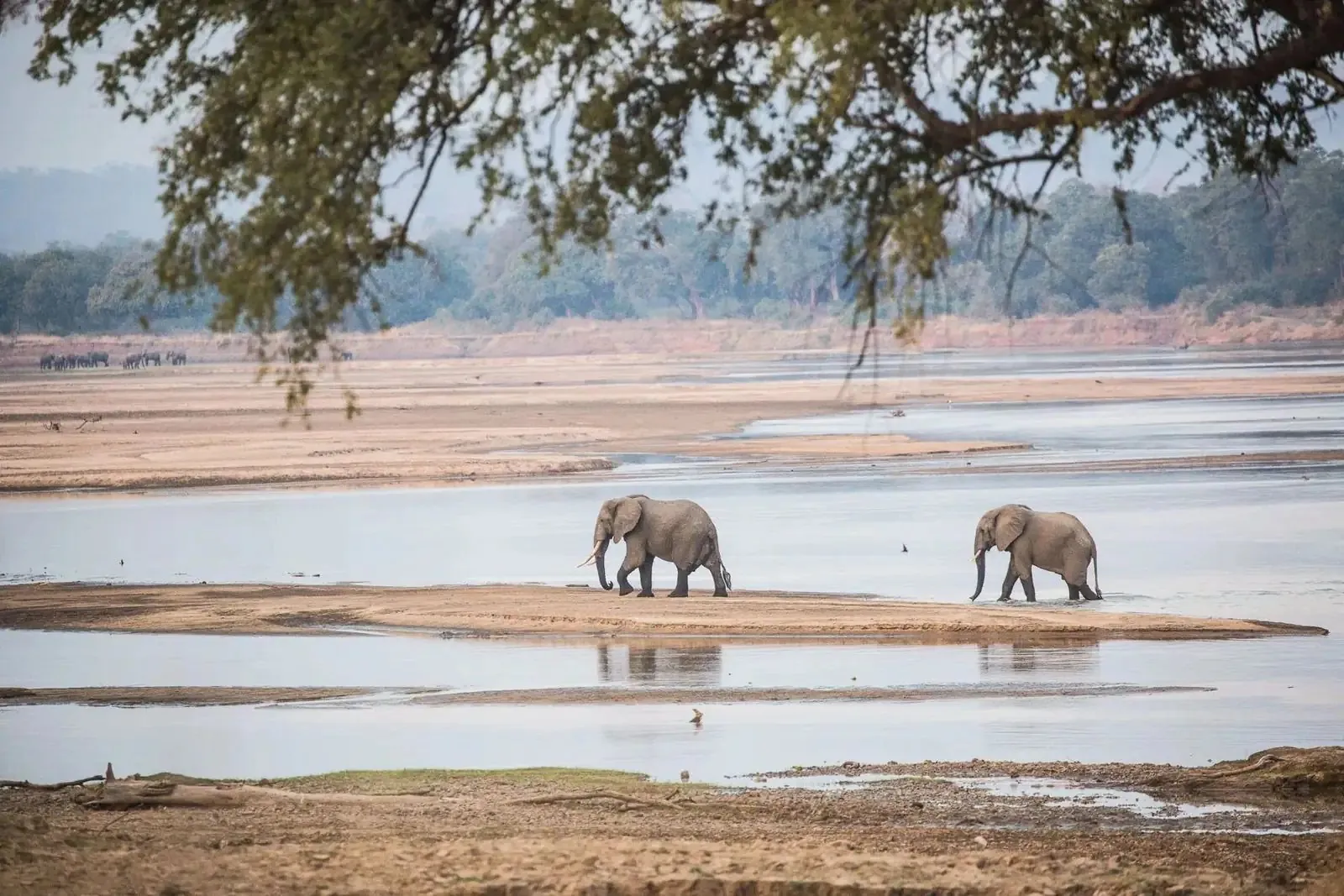
- Late dry season (September to October). Lagoons shrink to muddy margins, and some dry up completely. The river becomes the lifeline. Elephant herds, buffalo, antelope and big cats all concentrate within reach of the water, and the quality of game viewing peaks.
The drama of this time of year is in the details. In the Luangwa Valley, guides describe hippo bulls fighting over the last deep lagoons, crocodiles leaving drying pools to walk overland to the river, and storks and other fish-eating birds working the shallows as the water gets thinner and the fish are trapped. The valley is often cited as holding one of the largest hippo populations in Africa, and when the lagoons shrink the animals have to share smaller spaces. Buffalo and other herds follow predictable routes down to the water, and lions know exactly where to wait.
The Luangwa: how a river builds a walking landscape
Nowhere shows how this works better than South Luangwa National Park, and it is a large part of why the valley became the home of the walking safari.
The Luangwa is a winding river that carves its way along the floor of a valley some 700 kilometers (435 miles) long and about 100 kilometers (62 miles) wide on average. Every rainy season, dozens of seasonal streams and sand rivers feeding it come down in spate, and the main river rises and spreads across its floodplain. The Luangwa is undammed, so it still floods naturally every year, the way it always has, and that annual flood is the engine of everything you see on a walk.
- The flood rebuilds the land. As the river rises it carries silt and deposits it across the floodplain and inside its bends. That silt feeds the grasses, the ebony and winterthorn groves, and the lush riverine woodland, which is why the park can support such a high density of animals.
- The flood moves the river itself. In flood, the river cuts away the outer edge of each bend and drops silt on the inner edge. Over the years the loops grow tighter, until the river breaks through and takes a new, straighter course. The old loop is left behind as a curved, cut-off body of water: an oxbow lagoon.
- The flood refills the lagoons. Each rainy season the high water tops up these lagoons, along with the pans and side channels. Some are deep enough to last all year. Others shrink as the dry season goes on, and as they do they become a rich feeding ground for hippos, crocodiles, storks and fish eagles.
- The flood leaves wafwas behind. The old channels that have dried out completely become wafwas, sandy, winding, dry riverbeds that thread through the valley. They are shaded by overhanging trees, cooler than the open ground, and used by wildlife as natural roads. They also hold tracks beautifully, which makes them a gift to a guide and scout reading the morning’s activity.
The result is a landscape of many kinds of habitat sitting close together: river, lagoon, floodplain, wafwa, riverine forest and open woodland. Each supports different animals, and in the dry season they are all within a short distance of one another.
The scale of the flood is real. In the wet season the Luangwa spreads across its plain and can cut the valley off entirely, which is why camps here have traditionally been rebuilt from pole, mud and thatch after each year’s water. Then the river retreats, the lagoons settle and the valley dries out. That cycle is what supports an unfenced park of about 9,050 square kilometers (2.2 million acres), with elephant and buffalo herds, hippos in the hundreds, lion, painted dogs, and some of the finest leopard viewing anywhere. It also holds animals found nowhere else: Thornicroft’s giraffe, Cookson’s wildebeest and Crawshay’s zebra live only in the Luangwa Valley. Some 400 bird species have been recorded here, many of them at the lagoons.
Why that makes such a good place to walk
- There is always something to find. A morning on foot can take you along a lagoon edge, up a wafwa and through a grove, passing tracks, birds, antelope and elephants in a couple of hours.
- The ground is walkable. Wafwas and floodplain edges are open, sandy and easy to cross, and the trees give shade and sightlines.
- Wildlife is concentrated and predictable. In the dry months the animals are drawn to the river and to the lagoons that last. Your guide knows where, and plans the route and the wind accordingly.
- It is a living landscape. The river never stops redrawing the valley, so a place you walk this year may look different the next, which is part of why returning guests find it so rewarding.
This is why the best South Luangwa camps are chosen for their position on the river, near lagoons and wafwas, and not simply for the lodge. It is the water, and the way the flood shapes it, that gives a walking safari here so much to see.
Not all water is the same
When we look at a camp or a reserve, we ask what kind of water it has, because each kind changes the safari.
A permanent river
A river that flows all year, like the Luangwa, the Zambezi or South Africa’s Sabie, is the most reliable draw. It supports a long edge of shade trees, thick riverine forest and food for everything from hippo to leopard. Cameras and binoculars love it, because every day offers something different at the water’s edge. The caveat is that a river is only useful to you if your camp is on it, or close to it. A lodge set a few miles back from a river may be on a different safari altogether.
Oxbow lagoons
As a meandering river shifts its course over the centuries, it leaves old loops behind. Those become lagoons, cut off from the main flow. Some are deep enough to hold water year-round, while others shrink through the dry season. These are the places where you get long, quiet scenes: elephants drinking at the margins, hippos in the shallows, and waterbirds in the shade of the trees. In South Luangwa, the old channels that dry out entirely become wafwas, described above.
Dry sand rivers
A seasonal riverbed with no surface water sounds like the opposite of what you want, but it is one of the best features a safari area can have. In the Sabi Sand and Greater Kruger, guides use dry riverbeds as natural highways. Big cats patrol them, and the sand holds tracks perfectly, which is what makes tracking possible. Many of those sand rivers still hold pools just under the surface, and elephants will dig for water in them in the dry months.
Seasonal floodplains
Some of Africa’s most beautiful landscapes are shaped by water that comes and goes. Zambia’s Busanga Plains in northern Kafue are flooded by the rains and then drain slowly through channels from about June. The grassland, papyrus and mist at dawn are among the most photogenic scenes in Zambia, and the animals that gather there in the dry months, red lechwe, puku, lion and roan antelope among them, are easy to see in the open. The Okavango Delta works similarly, only on a far larger scale, with a flood that peaks in the middle of the dry season.
Pumped waterholes
In areas without much natural water, lodges and reserves pump water into pans to keep game in the area. They can be very productive, and they are a useful solution, but they are a different safari: animals come to a fixed point, you wait, and the experience is closer to watching a stage than exploring a landscape. We like them as a supplement, but we prefer a camp that sits in natural water country.
Why water is beautiful
There is a reason so many of the great safari photographs are taken at a river or lagoon. Water does three things that nothing else in the bush can do.
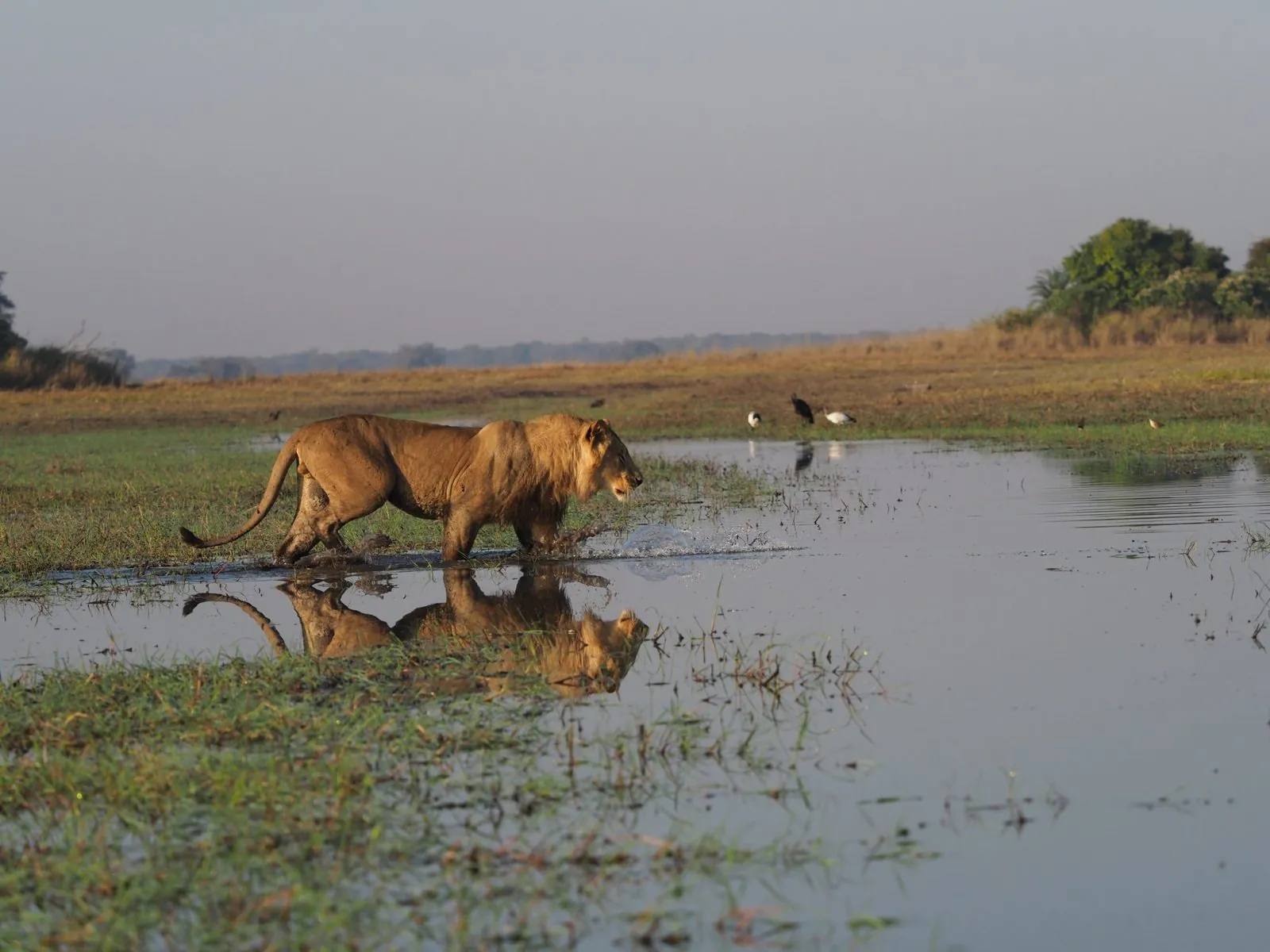
- It doubles the scene. A still lagoon at dawn or dusk reflects the sky, the trees and whatever is standing at its edge. A lion crossing shallow water, or an elephant wading through reeds, comes with a mirror image.
- It softens the light. Mist at first light, low sun on the surface and the long shadows of riverine trees give a gentler, more golden look than open dry country.
- It brings in everything else. Kingfishers, bee-eaters, storks, fish eagles, crocodiles, hippos and the animals that come to drink make a water scene full of movement. You can sit still and the scene keeps changing.
That is also why a sundowner on a riverbank is such a favorite. The setting is peaceful, the wildlife is easy to watch, and the setting sun does the rest.
What this means for a walking safari
On foot, water matters even more. Walking along a river or lagoon edge is where you find the most to look at in a morning: tracks pressed into mud, birds feeding in the shallows, and elephants that you can watch quietly from a safe distance. Dry riverbeds make good walking routes, and the shade of riverine trees is a real comfort in the afternoon heat. The shrinking water of the late dry season also means animals are more predictable, so your guide has a better idea where to take you.
Your guide and scout also read the water. They know which lagoons hold hippo and which channels the elephants prefer, and they plan the route to keep a safe, sensible distance. This is one reason that where you walk matters as much as how.
How to choose a place with good water
You can use a few simple questions to find out whether a camp sits in good water country. An honest adviser will answer them directly.
- Is the camp on the river or a permanent lagoon, or set back from it? Frontage matters more than almost any other factor.
- What does the water do in the month I am traveling? A lagoon that is full in June may be mud in October. Ask what the land looks like in your month, not in the brochure.
- Is it natural or pumped? Both can be good, but you should know which one you are getting.
- Who else uses the water? The busiest river stretches can have many vehicles at once. A quieter bank with the same animals can feel very different.
- Does the area have more than one kind of water? River plus lagoons plus dry channels is a richer mix than a river alone, because there are more habitats within reach.
Where we send travelers
For classic water country on foot, we lean toward South Luangwa, where the river, oxbow lagoons and old channels make a walking landscape that is hard to match, and Lower Zambezi, where a wide river sits under an escarpment and walking, canoeing and river views come together. For open water and wide horizons, the Busanga Plains of Kafue in the dry months. And for big cats in sand rivers, South Africa’s Sabi Sand.
If you tell us what you want to see, and when you can travel, we can tell you what the water will be doing and which camps are in the right place for it. That is the kind of detail that makes a good safari great.
